Research / Bifurcations in dynamical systems
Bifurcations in Dynamical Systems
Bifurcations are the parameter values at which the qualitative behavior of a dynamical system changes: equilibria collide and vanish, branches fold, periodic orbits are born. Proving that a specific model undergoes a given bifurcation means verifying both degeneracy conditions, which are equalities, and non-degeneracy conditions on normal form coefficients, which are open conditions on quantities that are rarely available in closed form. Part of my research develops computer-assisted methods that verify all of these hypotheses at once, for ordinary, partial and delay differential equations.
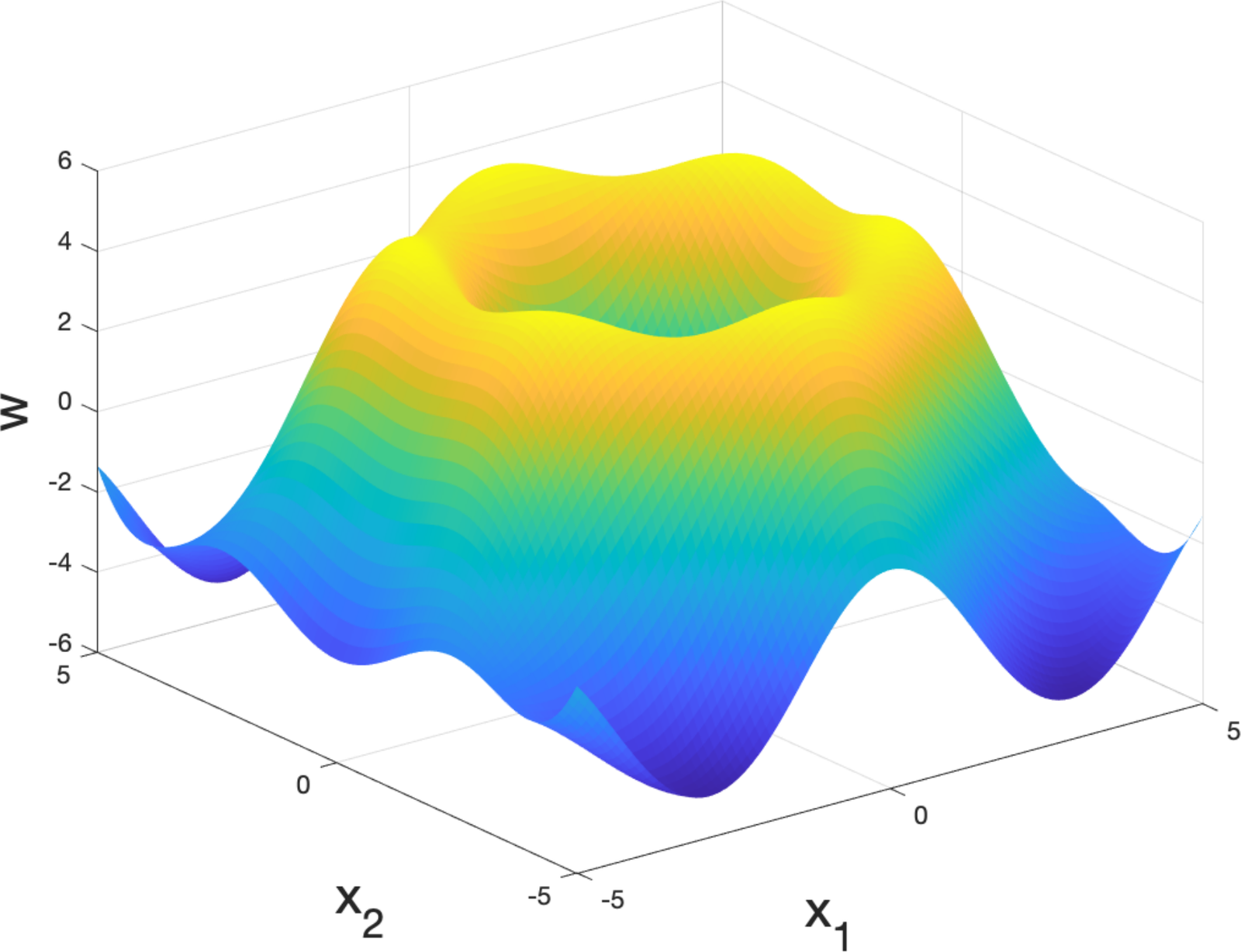
Cusp bifurcations of periodic patterns
A cusp bifurcation is the point where two fold curves of a solution branch meet; inside the cusp region, three stationary states coexist. In [81], we give a computer-assisted framework to prove the existence of cusp bifurcations of spatially symmetric stationary periodic patterns in parabolic PDEs. Beyond existence, the method certifies the sign of the normal form coefficient and the number of unstable eigenvalues, which together determine whether the cusp region is bistable, monostable or has no stable state. We prove cusp bifurcations in the Swift–Hohenberg equation and the Gray–Scott system, in one and two space dimensions.
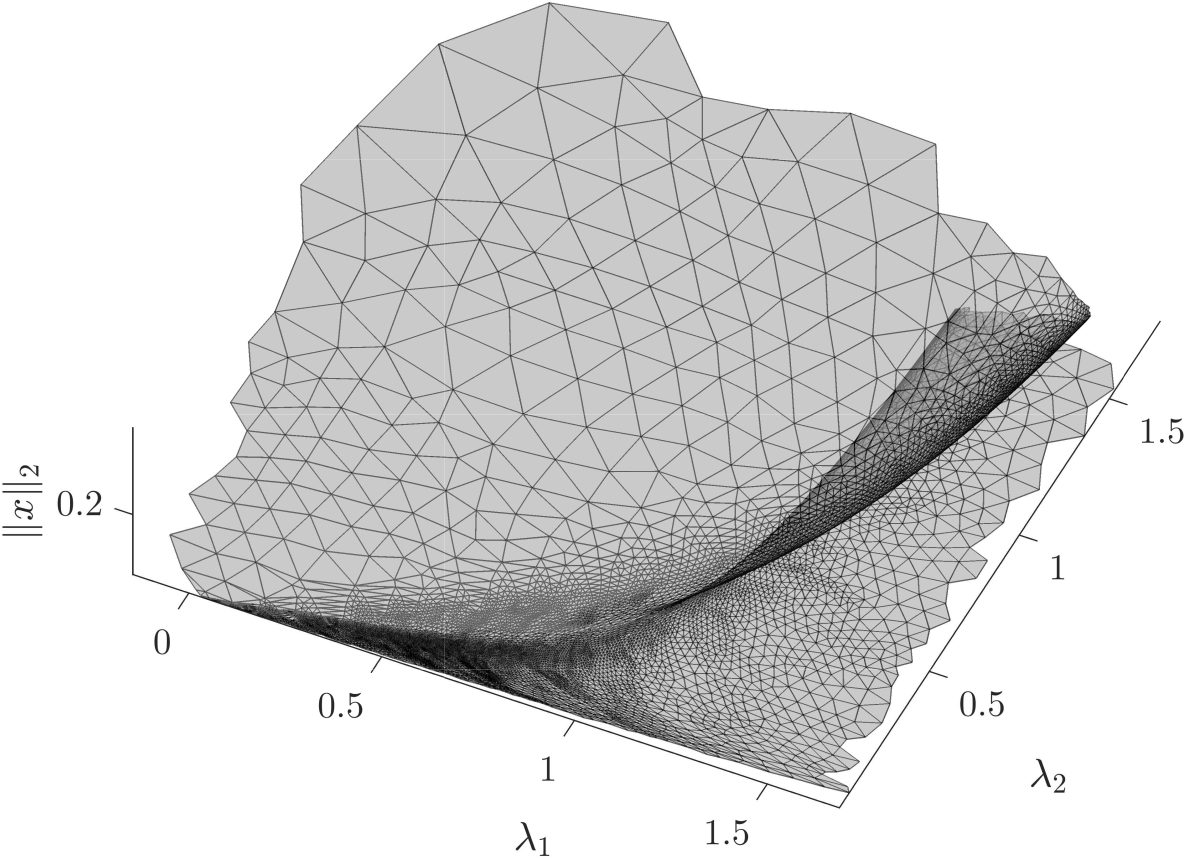
Cusp bifurcations in ODEs
Cusp bifurcations are codimension-two points where two fold curves meet, and they organize bistability in many models. In [73], we introduce a computer-assisted method to detect cusp bifurcations and prove their existence. A two-parameter continuation combined with a Poincaré index argument first locates the cusp, which is then validated as a non-degenerate zero of an augmented system. The method also gives a rigorous enclosure of the normal form coefficient, and hence of the dynamics on the center manifold at the cusp. We illustrate it on four different models.
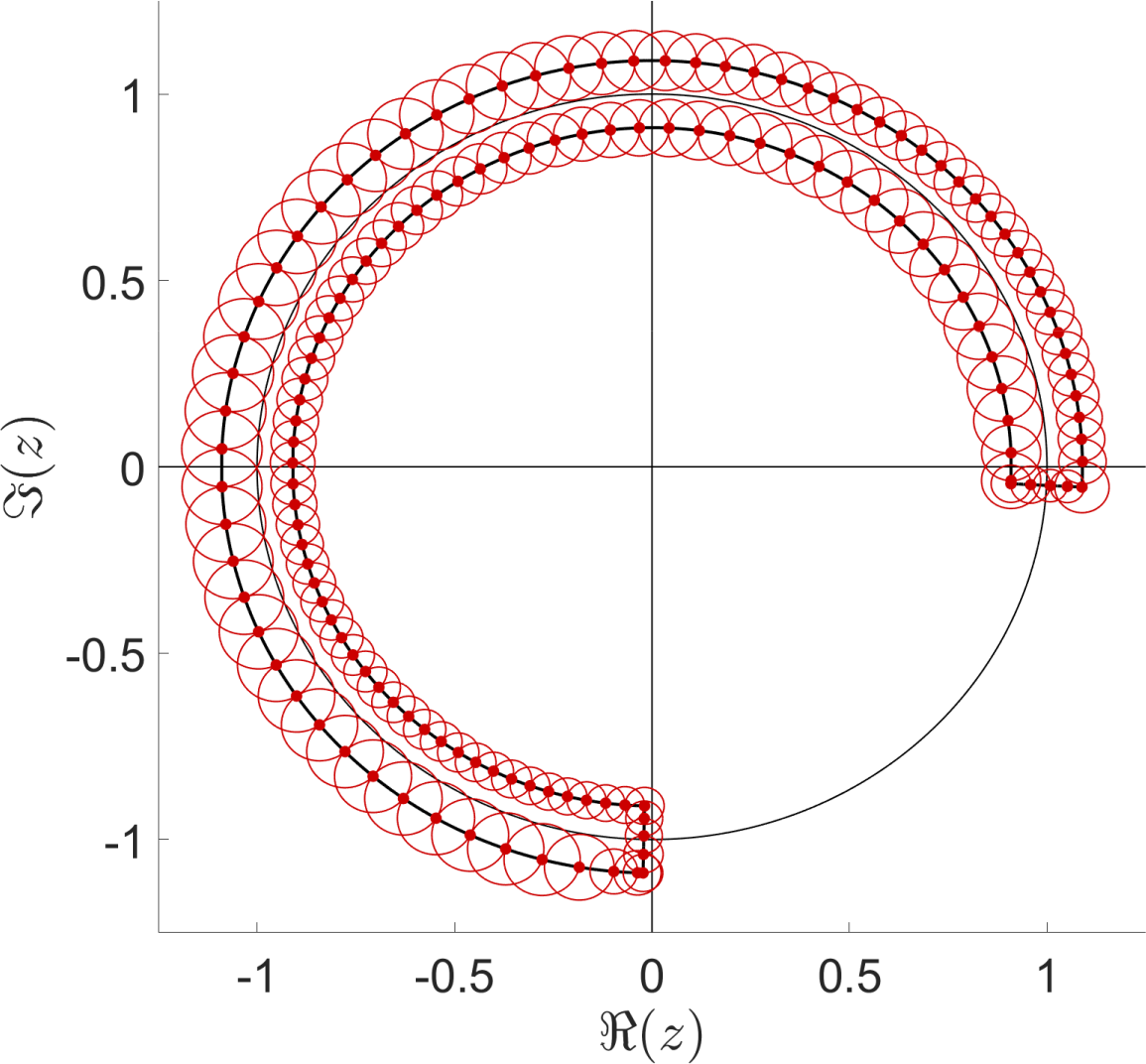
Hopf bifurcations in functional differential equations
The Hopf bifurcation is a fundamental route to oscillations in nonlinear systems. In [55], we develop a rigorous method to prove the existence of Hopf bifurcations in functional differential equations of mixed type, which may involve both delayed and advanced arguments. All the hypotheses of the Hopf bifurcation theorem, including the non-resonance of the critical eigenvalues, are verified with computer assistance. We apply the method to the Lasota–Wazewska–Czyzewska model of blood cell dynamics, and we use it to prove the existence of periodic traveling waves in the Fisher equation with nonlocal reaction.
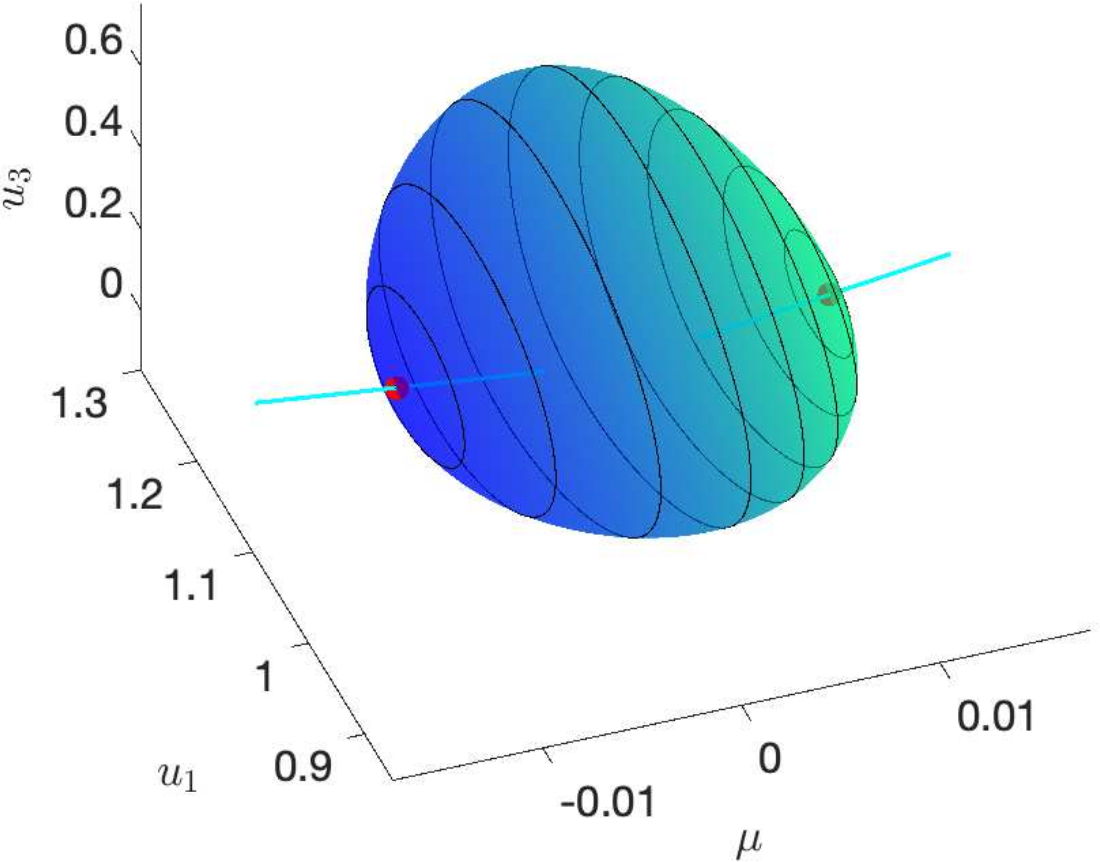
Hopf bifurcations in ODEs
Periodic orbits are commonly born at Hopf bifurcations, where a pair of complex eigenvalues of an equilibrium crosses the imaginary axis. The branch of orbits emerging from such a point is singular for continuation methods, since the amplitude of the orbits vanishes there. In [51], we desingularize the problem by blowing up the amplitude, which turns the Hopf point into a regular solution of an augmented system. Validated continuation then proves the bifurcation itself and follows the branch of periodic orbits away from it, through subsequent folds.
Bifurcations in the diblock copolymer model
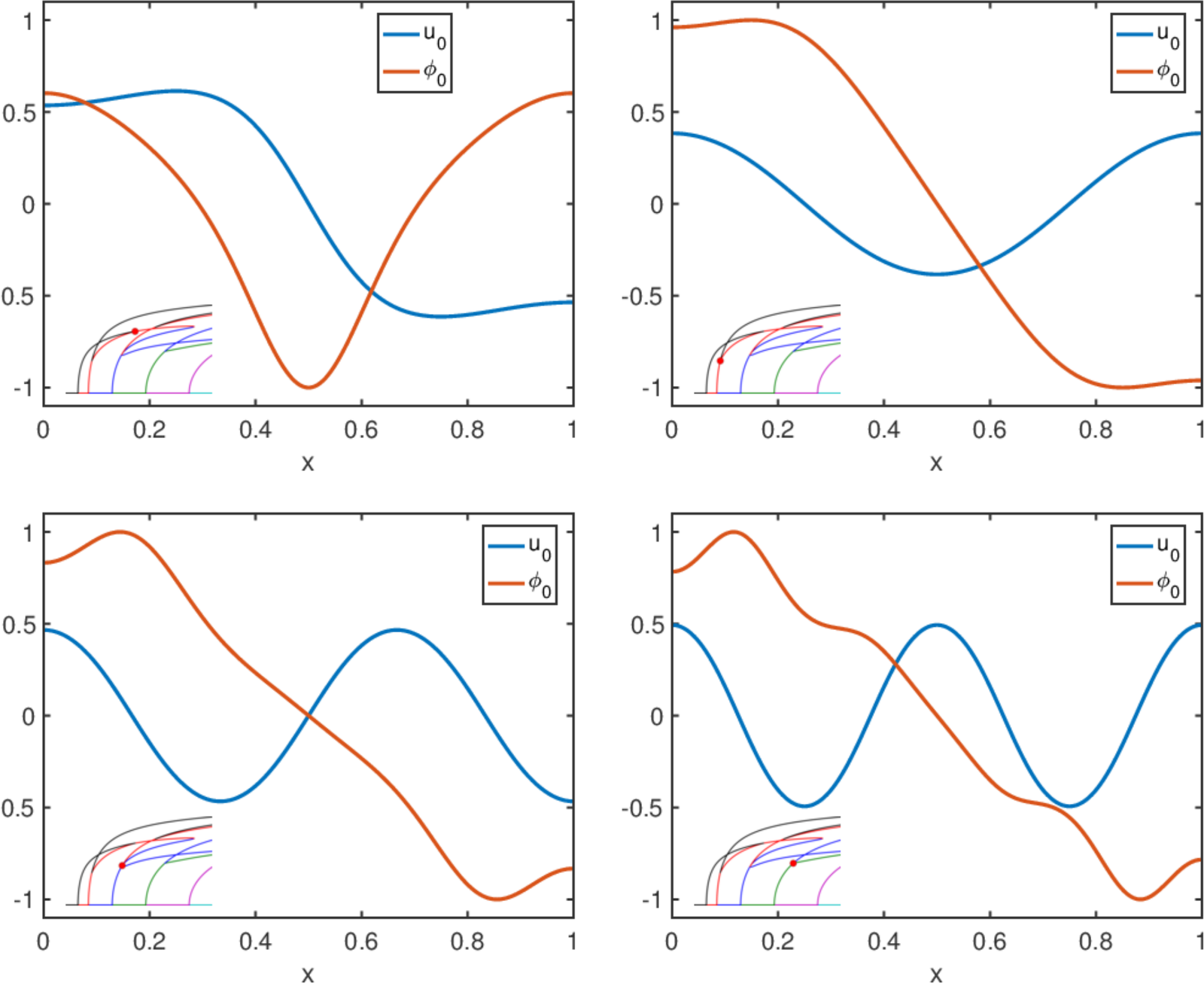
The diblock copolymer equation models phase separation in polymer mixtures and has a rich bifurcation structure. In [35], we rigorously compute continuous branches of bifurcation points of its equilibria in one space dimension. The method covers both fold points and pitchfork bifurcations forced by the symmetries of the equation, using extended systems that encode the existence of an equilibrium together with the degeneracy of its linearization. This yields computer-assisted proofs of whole curves of saddle-node and pitchfork bifurcations as a second parameter varies.
Saddle-node bifurcations in ODEs
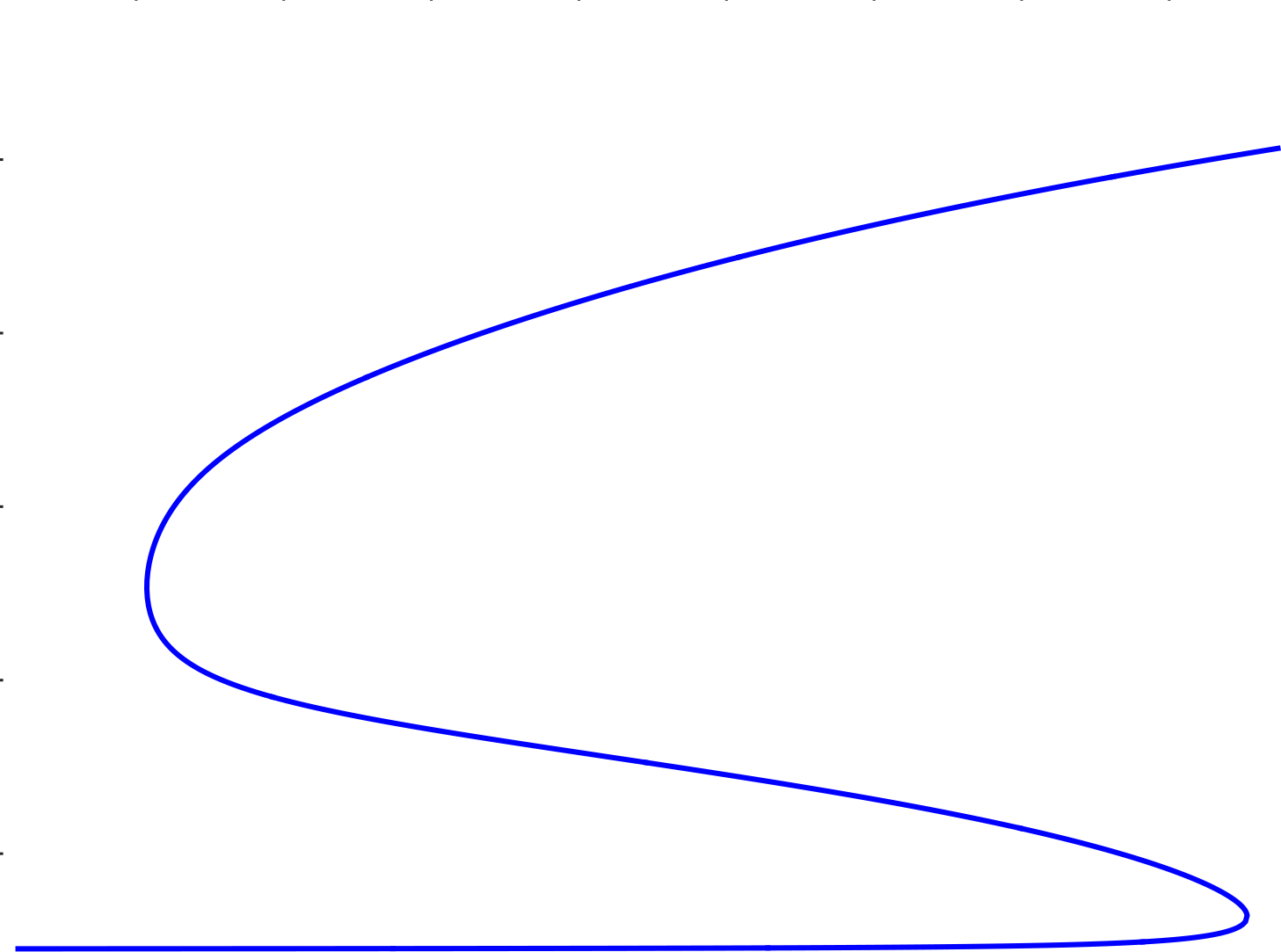
At a saddle-node bifurcation, two equilibria collide and disappear as a parameter varies, and the dynamics near the collision is governed by a center manifold. In [29], we introduce a general method for the rigorous verification of saddle-node bifurcations in ordinary differential equations. After a set of sufficient genericity conditions is stated, an algorithm verifies them with interval arithmetic and returns explicit bounds within which the bifurcation occurs. The approach is used to prove the existence of saddle-node bifurcations in the Hodgkin–Huxley model of nerve conduction.
Related publications
- [81]Rigorous Validation of Cusp Bifurcations of Stationary Periodic Patterns in Partial Differential Equations PreprintD. Blanco and J.-P. LessardPreprint, 2026
- [73]Cusp bifurcations: numerical detection via two-parameter continuation and computer-assisted proofs of existenceJ.-P. Lessard and A. PuglieseDiscrete and Continuous Dynamical Systems - Series B, 30(6): 2135–2158, 2025
- [55]Rigorous verification of Hopf bifurcations in functional differential equationsK. Church and J.-P. LessardPhysica D, Volume 429, Paper No. 133072, 2022
- [51]Rigorous verification of Hopf bifurcations via desingularization and continuationJ.B. van den Berg, J.-P. Lessard and E. QueiroloSIAM Journal on Applied Dynamical Systems, 20(2):573–607, 2021
- [35]Rigorous continuation of bifurcation points in the diblock copolymer equationJournal of Computational Dynamics, 4(1-2), 71–118, 2017
- [29]Rigorous verification of saddle-node bifurcations in ODEsJ.-P. LessardIndagationes Mathematicae, 27(4): 1013–1026, 2016